Let me start with hysterical discovery.
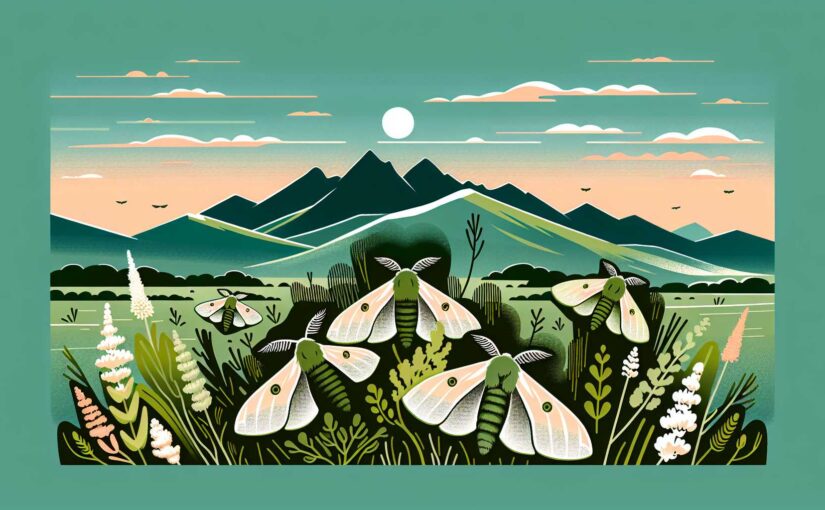
Despite three years of living in Australia, this was the first year that I met … Ladies and gentlemen … The Bogong Moth. This is a beautiful, quite sizeable dark moth that emerges each spring from under the soil in Queensland where it breeds, then flies more than 1,000km to the alpine region; that string of mountains from Namadji in Canberra to the Yarra ranges just outside of Melbourne.
Its journey is miraculous. And its proliferation is astonishing. Canberra is the only capital city in Australia with a name actually based on an Aboriginal word instead of a dead white bloke. The word Kanberra actually meant meeting place – which is serendipitously a perfect name for a place where representatives of the nation’s regions meet and talk about stuff. Before colonisation, the area of Canberra at the end of the alpine region was the meeting place for numerous indigenous peoples to gather for the arrival of the Bogong moth, to eat it and celebrate the return of life.
Over the three springs I lived in Canberra, I never saw this little spring harbinger of abundance, celebration and friendship. The fires of 2019/2020 pretty much put a stop to several generations of the fluttery traveller, but this year has been a big resurgence. On our first few days in Canberra, a friend’s little girl said her classroom was full of moths (attracted – and disorientated, ehhh, by urban modern lighting) but a magpie had got in and eaten them all. She seemed very pleased about this. No doubt, so was the magpie. I found this hard to imagine at first. I still hadn’t seen any moths.
On this trip we did a standard pals trip to the coast. Book a big beach house somewhere on the ‘south coast’ (it’s south of Sydney – geographically east, not south. I have told them this, but still they refuse to change it), all crash down there and eat and drink debaucherously for four days. Three of us arrived first. We unlocked the house, chose the best (identical) rooms and began exploring the second-hand books and board games, sipping welcome gins.
The moths. They were clambering around on the window and door screens. They were piled up in corners. They skimmed the hard floors, they fell out of curtains, cups, dusted pillows. The hedgerow out the front was an enormous red bottlebrush bush (that’s easy for you to say) which was hysterical with moths. And rainbow lorikeets, and wattle birds. I sat out there for hours staring at them flutter around, skimming the evening sky like hard bits of ice that waver their way down when snow first starts. On the beach, there were laced edges of them where the waves ran up the sand. In the bush they were everywhere around. Knock a wattle tree and they would cascade off it. My chums found it perturbing to raise a wine glass and have their lips tickled by a drowning a moth; to lean over the sink to rinse teeth and there’s another. I loved it like hell.
It was great to be all together, eating oysters, drinking delicious wines from midday to midnight, playing games and talking in our extravagant commitment to gluttony. It was great to contribute to the inefficient economies of seaside tourist towns and buy an expensive hat. It was good to fit straight back into a group of friends with our jokes and make new ones – and feel that extraordinary feeling that time had collapsed into itself so that four years was both a few seconds and a lifetime.
The rest of the trip was expectedly beautiful. In Tidbinbilla at the edge of Namadgi national park I saw kangaroos. They were hanging out at Flints, like they always do. There was that fun thing where a mother crops the grass and another little head sticking out of her belly also crops the grass in symmetry. The soundscape of the place is devastating. The wind, the rustle of leaves, the screech of cockatoos (Sing! Sing the song of your peoples!), the frogs that you can – swear to god – be right on top of and still not see. The blue hills around that sound bounces off, the enormousness of it all.
We drove around vineyards in which I got riotously drunk and impaled one sommelier with many questions (I could hear his English accent, so with all my countryfolk abroad, I demand, how got you out?!) uninhibitedly. I was ecstatic about spinebills and fairy wrens. All the landscape familiar, welcoming me back. All my old metaphors for describing those things reoccurred to me. Along with the intrinsic strangeness of the landscape to my English eyes. How I look at the green sweeping fields and think Yeah, why ISN’T it like England? There are open fields just like here, rocks and stones, forests just like here. But everything is uncannily … just a little to the left. The green is browner. Bluer. Those tree trunks in bone white, like gigantic skeletons carefully stepping over hills. Fields ruptured by stones, the woods like rough pottery in your hands. Something feels much, much older. Maybe it is like … south Wales? Lol. But the light is different. The light scrubs your retinas, beats your head, makes you understand the whole thing differently, clarity, per forza, clarity. Brilliant, from the Latin – to shine. It brilliates. La primavera d’intorno brilla nel’aria.
Down by the lake the whole world was unimpeachably blue. I had the dubious urge to go for a run. Lake Burley Griffen in Canberra has a 5 km ‘central loop’ (and then east lake and west lake either side which are much bigger) and those 5ks are perfect for joggers, walkers, cyclists. I used to run round there. I was never at the lake, but I was on my bike. We overcame the urge to exercise vigorously by having kewpie mayo bacon rolls and croissants. So many croissants. We had dinner with absolutely everyone. We went to cafes and bars and markets and bought pretty things. I went to the Murrumbidgee river with a friend and sat at the crossing, watching eagles soar. I performed poetry at Smiths, I sang shanties. I climbed Mount Ainslie with one friend, Black Mountain with another. I visited the young girl I used to mentor with Barnardo’s who is now all grown up, full of friends and chat and excited about everything. We went horse-riding on an exquisite afternoon where the light twisted its thick mouth and chewed the trees. How foolish some things seemed. How alien, some of the thoughts that I live with at home, my turgid self no longer rustling behind me. Not in the voice of all that light in the currawong’s golden eye.
You know, earlier this year, I was thinking about the verb ‘riconoscere.’
It was on my morning wood walk; which I do every day – and even though I have become such a fiend for wasting my goddamn life on Instagram, it is the one time of day I leave my uninteresting phone behind and am perfectly, rapturously present. I disperse into the sphagnum and the photons, to be recollected by the jays and blackbirds. The point is, if you truly make an effort to engage fully with your landscape, you too can drift into marvellous creative spaces, including the meaning of Italian verbs you learned in your twenties.
It reminds me (because I’m an insufferable cunt) of what Milan Kundera ponders in The Unbearable Lightness of Being about Nietzsche’s philosophy of eternal return. I can feel my mother roll her eyes. But listen; this is what he says. Our ephemeral lives are meaningless because we have no previous ones to compare them to, in order to identify what we truly want. And the Italian verb for recognise – to see a street, a river, a person and realise you already know them – is riconoscere, directly, to re-know, from the verb conoscere, to know. In French riconnaitre, Spanish, reconocer; Portuguese, reconhecer – they are all the same. Obviously, they all come from the root of Cognition, thought, the working of the brain to know just like the English word, but because we don’t say ‘I cognise’ when we ‘know’ something, in English it feels like there is a step between the word and the understanding of it. Understanding that ‘to recognise’ means to know a thing again, makes me think of that first knowing. It’s not just seeing a thing, then later it’s familiar. You knew it; there is depth, intimacy, deep understanding. And then the significance of that Return, coming back to the known thing, as if you always carried it with you. There is a sense of belonging, coming home to something.
I talk a lot of wankery about Return. Going back to a place you knew before is important, I reckon, to understand both Place and Self. And it comes from that re-knowing, knowledge opening its arms to you, if you will, pulling you back to it. There is something powerful about the voyage and Return. Different lives and aspects of the self shift over each other roughly, return intensifies meaning by de-ephemerising. To go away and come back, to find things where they were, to identify what has changed, I think, can bring a kind of certainty.
All this, really, to answer the first question I’ve been asked by everyone; do you wish you’d stayed there?
On my first day back in Canberra, I went to the Botanic gardens. Even the car park is enchanting. I know I’m dramatic like this, but all the numberless, nameless spring flowers were out, wattle birds were chattering, all the tuneful whistles of the crimson rosellas and the white of eucalyptus trunks – that WHITE; I cannot explain to you HOW WHITE, and how striking it is to see trees rising like marble colonnades – was all so incredibly beautiful that I had to bury myself in a kangaroo paw plant and just have a little cry. I am not being truthful. It wasn’t a little cry. I heaved great sobs. But what I was getting from my Certainty of Return, the abrasion of my Australian life over my English one was not wretchedness at having left, not despair at having to leave again – but – well, I don’t know how to say this un-lamely, but … love. Jesus levels of overwhelming, peaceful, ecstatic love.
I woke up gently every day in a room so thickly shaded by Atlanta cedars that the sun took an extra hour to reach the windows, listening to koels. And magpies, and rosellas. Currawongs. Sometimes galahs zzk-zzzking overhead. And it was like those sounds were somehow in my bones, I was made of them, something had been exchanged. Their calls above had bits of me in them, I recognised; re-knew myself, was stitched back into that landscape with every song.
It doesn’t matter that I left. The rocks, the trees, the hills are still there, singing, and I am singing them, wherever they are. There is no loss. That time in my life gave me so much; and the most important thing of all was the ability to look at a place and pay attention. To know, then re-know, intimately. It made me love my own home more. I came back to England and stood in a wood, gold with fallen chestnut, sycamore and silver birch leaves. I stood in the glowing light and listened to the squirrel beating an acorn, listened to the alarm calls of wrens and knew them, re-knew them and their renewal; I knew my home. All these things, all these places, are in me, enormously.
My arms are ten thousand miles long to hold them all.