Now look you, mark, listen.
I started writing about Christina Collins over a year ago. That is not true, it was before then (I have also written that sentence before). From the first time I read my name in a book telling ghost stories about ghoulish murders, I have been fixated on this thing. I have travelled it, vigiled it, honoured it, written it, in every form. I’ve settled on poetry – for now at least.
But after watching a ghastly documentary that tried to exonerate the condemned of the 1839 rape and murder of 37-year-old Christina Collins, I decided at last to throw John Godwin’s 1990 text aside and go back to the sources. Everything that seems to be known about the business comes from his book. Morse author Colin Dexter first responded to it, then numerous boating or history enthusiasts regurgitated all the same information without reference. And seeing as those details seemed to count so much to two spurious lawyers that seemed to think a convicted murderer more important than a dead woman, I bethought me to look, myself.
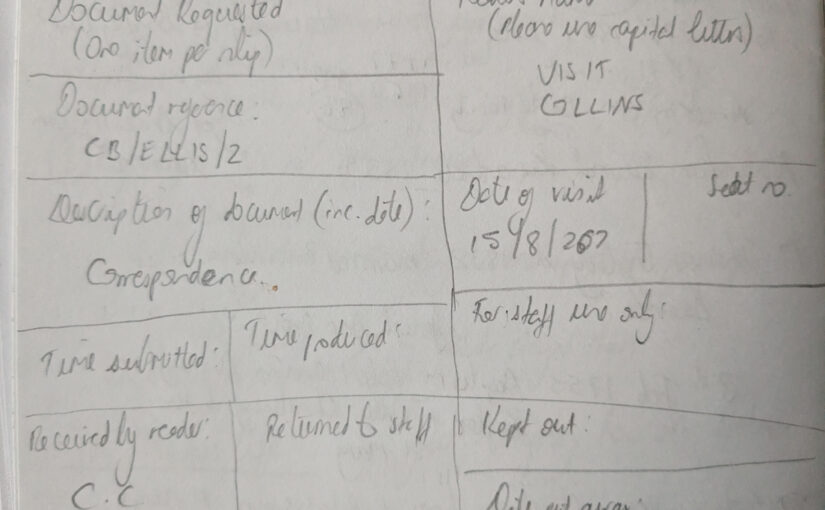
And I have been – I am – compelled to document the documents. The moment I entered the archive room, locked down like a damn Wuhan Lab, I started copying even the document slip. If I think my word ought to be listened to, I should have enough to back to up.
I avoided doing this research for so long. What’s the point, I thought – Godwin’s done it all. But I immediately found inconsistencies. Let me tell you.
In the hours of the sharp-lit archive room, increasingly mad with thirst and hunger while attempting to transcribe an enormous sheet of paper I was forbidden to photograph, I found this:
On Saturday morning about eight o clock, the culprits appeared on the platform in front of the gaol at Stafford. They were very much agitated and were obliged to be supported while the executioner performed his sad duty.
I know Godwin read this ‘local newspaper’ – though it is unreferenced in his text, and the copy in my hand bore no name at all. I know he read it because he quoted an earlier section of it verbatim. However, Godwin refers to the same passage above in these terms: The men walked with a firm step, and ascended the steps of the drop without assistance.
Well friends, citizens, year 9. What do the changes in word choice tell us? What is their cumulative effect? Why might Godwin present rapists and murderers as walking with ‘firm step’ in direct contradiction to the published text? I was no history teacher, but I can tell you Godwin’s secondary source is already an artefact of misogyny, whether or not unwittingly.
In my kitchen the following week, reading through all contemporary press about the 1840 assizes trial I found another. Godwin refers to Collins sending his wife a guinea, while the Staffordshire Advertiser’s transcript of the trial and the Wolverhampton Chronicle’s summary both state sovereign. The merest of Wikipedia and Royal Mint rabbit holes reveal the guinea, as a unit of currency, went out of circulation twenty years before the point in question.
This is hardly a Gotcha. But these careless details. And now between Godwin and two different print journals, names are misspelled, completely different, left out entirely, accounts slightly differ, a garment is cut, is rent, was she drowned, suffocated, murdered, how many rapes are we talking exactly – god, the whole lot is horrid reading.
Godwin left out a lot. Most poignantly for me was the transcript stating that the prisoners heard Christina calling out her husband’s name, repeatedly. Hmm. I pause now to stare at the gloaming across the garden where the Gent has left a few things out to dry from washing the car. Yes, that detail will lodge itself in me.
I’ve also faithfully trawled marriage birth and death registers for Christina’s marriages. There are none. Godwin is clearly fascinated by the idea of this magician who toured the provinces that was allegedly Christina’s first husband, but if you can find a marriage certificate for Christina Brown and Thomas Ingleby, you’re a better researcher than I. I can’t find any birth or death certificate for him either. Who the hell is this man? For that matter, nor can I find a Robert Collins marrying a Christina. He testified at her trial, he was real. But did they actually marry? That in itself is interesting, is a story, tells me something.
I feel so foolish. I wrote a poem Netted Mesh about how Christina’s life seemed framed by her father, her brother, two husbands, three murderers – everyone else gets a look in, in Godwin’s text, but not her. But in fact, the closer I look at the threads around her, even they fray and fall apart. I am just staring at absence. All I have is a name, and a woman who was defined more by her death than life because there is nothing more interesting about a woman to document.
This callous lack of interest in a woman’s life. But then, pulling back, after staring at name after name of born, married and dead woman – that is all there ever is, of any of us. If we’re lucky, a name, listed somewhere. All these lives. But nothing of the living of them. Just names, to stand for an entire momentary explosion of the enormity of experience, feeling, hope and despair, wonder and beauty, love and dread – then out, out brief candle.
All we ever are. Just lists of names.
Christina Collins. Christina Collins. Christina Collins. Christina Collins. Christina Collins.